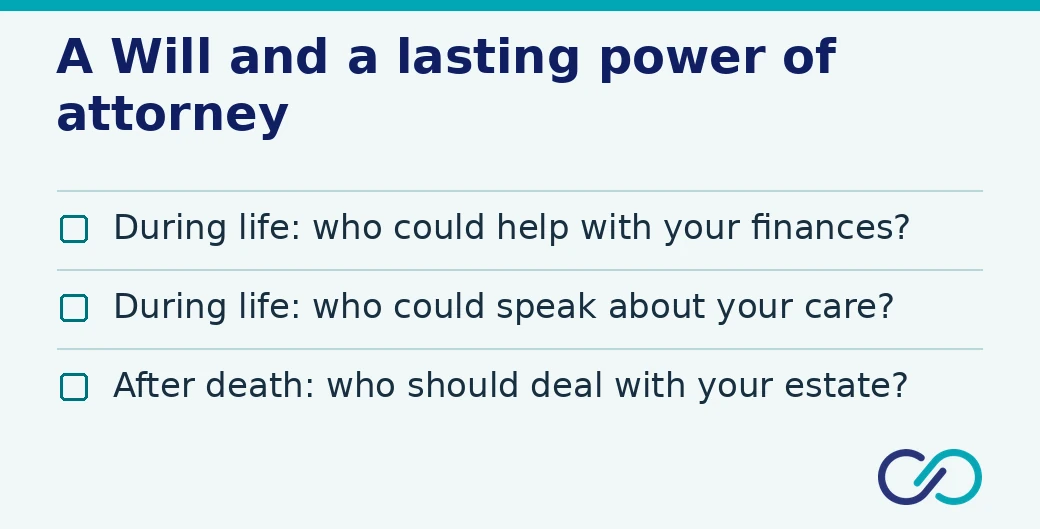
A Will and a lasting power of attorney (LPA) answer two different questions. Who could help you make decisions while you are alive? That is the job of an attorney. Who will deal with your estate after you die? That is the job of the executor you name in your Will. In England and Wales you can plan for both, and you can choose different people for each role.
What can an attorney do during my lifetime?
A registered property and financial affairs LPA can let someone deal with your bank, pay bills or manage your home. If you still have capacity, they can help with your permission, provided the document allows it. You might ask for that help during a hospital stay, for example.
A health and welfare LPA works differently. Your attorney can act only if you cannot make the particular decision yourself. They might need to speak to a care team about where you will live. You keep making every decision you can make for yourself.
How do a Will and a lasting power of attorney differ after death?
Your Will says who should inherit the money, possessions and property that pass through your estate. You can name an executor to collect the assets, deal with debts and distribute what remains. If you have young children, you can also record a guardianship appointment. Our Will writing guide explains what to consider.
Can I name the same person in my Will and a lasting power of attorney?
Yes. Imagine your daughter helps manage your bills under your financial LPA. When you die, her authority under that LPA ends. If you also named her as executor, she can then deal with your estate in that separate role. Your bank may ask for a grant of probate before releasing funds.
When should I arrange a Will and a lasting power of attorney?
You must have capacity to make an LPA when you sign it. If you lose that capacity before making one, a relative may need to apply to the Court of Protection to manage your finances. You can appoint more than one attorney and decide how they should act. See the official guide to making an LPA for the two types and the registration process.
If you have both a Will and a lasting power of attorney, tell your executor where the original Will is kept and tell your attorneys where to find their LPA. If you have only one document, consider who would handle the other role. For help with either question, explore our lasting power of attorney service or talk to us on 01933 588 990. We offer free home visits across Northamptonshire.